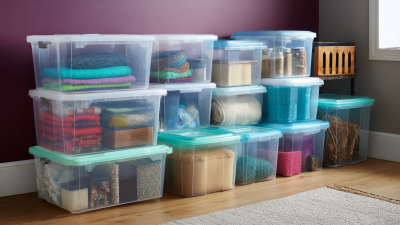
When it comes to global trade, the right packaging isn’t just about keeping things safe — it’s about being practical, reusable, easy to stack, and simple to inspect. That’s where Plastic Bulk Containers come in. You’ll see them used across a bunch of sectors like chemicals, food ingredients, agriculture, pharmaceuticals, and industrial materials. Their square shape helps optimize warehouse space, and the molded handles make it easier and safer to move them with forklifts or via pallet systems. But here’s the thing — no single container is gonna be perfect for every shipment.
According to the OECD’s Global Plastics Outlook, the world produced about 353 million tonnes of plastic waste in 2019 — nearly double what it was back in 2000. And packaging accounts for roughly 40% of that. That means choosing the right container isn’t just about price or appearance — it’s tied to durability, how many times you can reuse it, cleaning routines, and what happens to it once it’s finished with. The UN Environment Programme also stresses the importance of tighter controls throughout the plastic lifecycle. So, when you're picking out containers, it pays to consider things like the type of resin used, whether recycled content is involved, the design of closures, load limits, and traceability.
This guide looks at seven different types of Plastic Bulk Containers and helps global buyers evaluate them based on real-world criteria — not just how they look. We cover options like intermediate bulk containers, rigid pallet boxes, open-top bins, and special transport units. Standards such as ISO, along with supplier info and handling test results, give useful references. But remember, data sheets can only tell you so much. A container might perform perfectly in a warehouse, but could fail when exposed to UV rays, repeated washing, or uneven stacking. The fit really matters — for your product, the route you’re taking, the climate, and the handling equipment. Sometimes, you’ll need to do actual site tests because, let’s face it, real logistics are often more unpredictable than what a report shows in the lab.

What Are Plastic Bulk Containers and Why Do Global Buyers Use Them?
Plastic bulk containers are large, durable vessels designed to store and move liquids, powders, or granular materials.
Many use high-density polyethylene walls, a protective cage, a pallet base, and a fitted outlet valve. Common capacities range from several hundred to over one thousand liters. Their design supports forklift handling, controlled dispensing, and repeated warehouse movement.
Global buyers use these containers because they reduce packaging volume and simplify international logistics.
One container can replace many smaller units, which may lower handling time and storage demand. Standard pallet dimensions also help warehouses load trucks and shipping equipment more efficiently.
I have found that a secure cap and clearly marked fill line can prevent surprisingly costly mistakes. Small details matter.
They also offer practical protection against moisture, impact, and contamination when properly selected and maintained.
However, plastic bulk containers are not perfect. A cheaper model may deform under heat, while a reused container may retain odors or hidden damage. Buyers should check material compatibility, wall strength, valve quality, cleaning records, and local transport requirements. Food, chemical, and industrial applications may require different specifications.
A container can look strong and still fail during rough handling. Careful inspection remains essential.
Which Plastic Bulk Container Types Suit Different Industrial Needs?
Plastic bulk containers serve different industrial needs, and the wrong shape can create costly handling problems. Liquid manufacturers often choose rigid intermediate bulk containers with secure valves and wide filling openings. These units support efficient storage, transfer, and pallet movement. Their translucent walls can also help workers check fill levels quickly.
Dry materials may need stackable bins, open-top containers, or heavy-duty drums. Open-top designs suit powders, granules, and components that require frequent access. Tight-head drums offer better protection from dust and moisture. For outdoor storage, UV-resistant plastic reduces brittleness under strong sunlight. Still, UV resistance is not permanent. Long exposure can weaken even well-made containers.
I have seen buyers focus on capacity and overlook the outlet design. That mistake can slow production every day. Check wall thickness, handle strength, pallet dimensions, and forklift access before ordering. Food and pharmaceutical operations need smooth interiors and traceable material documentation. Chemical processing may require compatible polymers and tested seals. Temperature changes matter too. A container that performs well in a cool warehouse may deform near heat sources. Global buyers should request sample testing, stacking data, and clear cleaning instructions. A perfect container rarely exists. The practical choice balances durability, cost, loading speed, and local transport conditions.
How to Compare Container Capacity, Shape, and Space Efficiency
For global buyers, seven practical plastic bulk-container formats deserve comparison: rigid IBC totes, collapsible pallet boxes, rigid pallet boxes, open-top bins, conical hoppers, cylindrical drums, and insulated bulk tanks. Capacity alone can mislead. A 1,000-litre container may fit the product, yet waste valuable trailer height or warehouse floor space.
Many IBC totes use a pallet-sized footprint and hold about 600–1,000 litres. Their rectangular shape usually improves truck and warehouse utilization. Cylindrical drums resist pressure well, but leave gaps between units. Conical bins nest efficiently when empty, though their tapered walls reduce usable volume when filled. Collapsible boxes save return-trip space. They do not always provide the strongest stacking performance. Check load ratings carefully.
UNCTAD reports that maritime shipping carries over 80% of global merchandise trade by volume, making dimensional efficiency important across long supply chains. ISO 668 container dimensions also show why exterior measurements matter; internal space is always smaller than the advertised container size. The OECD’s Global Plastics Outlook reported 353 million tonnes of plastic waste in 2019, with only 9% recycled. Reusable designs can reduce replacement demand, but only when cleaning, repair, and reverse logistics are realistic. Shape changes everything. My comparison would still test actual product density, forklift access, stacking height, and empty-container return costs before selecting the “best” format.
What Materials and Construction Features Affect Container Performance?
7 Best Plastic Bulk Containers for Global Buyers
Material choice directly affects strength, chemical resistance, and service life. High-density polyethylene, or HDPE, handles impact well and performs reliably across many industrial applications. Polypropylene offers stronger heat resistance, but it can become brittle in cold conditions. Linear low-density polyethylene provides flexibility, although excessive flexing may reduce dimensional stability.
Construction matters just as much. Thick, uniform walls resist dents and pressure changes during transport. Ribbed panels improve stiffness without adding unnecessary weight. Reinforced corners protect containers during forklift handling. Secure lids reduce contamination, while gasketed closures help control moisture and leakage. Pallet bases should distribute weight evenly and support stable stacking. ISO 21898 provides performance guidance for flexible intermediate bulk containers, while ASTM D1998 covers polyethylene storage tank requirements. These standards offer useful benchmarks, not automatic guarantees.
Tips: Check resin compatibility with the actual contents, not only the product category. Review drop, stack, UV, and temperature test results. The OECD’s Global Plastics Outlook reports that only 9% of plastic waste was recycled globally in 2019. Longer service life therefore matters. Yet, a heavier container is not always better. It may increase freight emissions and handling costs. Ask suppliers for wall-thickness tolerances, recycled-content details, and inspection records. Small design differences can become expensive problems.
How Do Safety, Certification, and Export Standards Guide Selection?
7 Best Plastic Bulk Containers for Global Buyers
Choosing among rigid HDPE drums, IBC totes, pallet boxes, stackable bins, jerrycans, collapsible tanks, and reusable crates requires more than capacity. Safety comes first. Check wall thickness, load rating, closure design, forklift access, and resistance to temperature changes. For regulated transport, verify the correct UN packaging code and test record. A container may look durable but fail after repeated stacking.
Export routes add another layer. UNCTAD’s Review of Maritime Transport 2023 states that over 80% of global merchandise trade by volume travels by sea. Containers may face vibration, salt air, pressure changes, and long warehouse storage. Select models with documented drop, leak, compression, and vibration testing. Food-contact cargo also needs material declarations and destination-market compliance. Never treat one certificate as universal.
Sustainability deserves careful judgment. The OECD’s Global Plastics Outlook reports 353 million tonnes of plastic waste in 2019, with only about 9% recycled. Reusable containers can reduce replacement waste, but only when return logistics work. A lightweight design is not automatically the greener choice. Ask for recycled-content evidence, repair guidance, cleaning limits, and end-of-life instructions. Some export plans still overlook labels, spare lids, or pallet compatibility. That mistake is costly. A sensible selection combines verified standards, practical handling trials, and honest review of where the container may fail.
7 Best Plastic Bulk Containers for Global Buyers
How safety, certification, and export standards guide selection
The chart compares common nominal capacities for widely used plastic container formats. Smaller jerrycans and pails support manual handling, while drums and IBCs improve bulk logistics efficiency. For dangerous goods, buyers should verify the UN packaging mark, performance-test certificate, closure compatibility, stacking requirements, and destination-country transport rules. Certification is application-specific and is not automatically guaranteed by container type alone.
Which Reuse, Cleaning, and Handling Factors Matter Most?
For global buyers, the best bulk container is not simply the largest or cheapest option. It must survive repeated loading, washing, storage, and export handling.
Common choices include stackable bins, pallet boxes, drums, intermediate bulk containers, collapsible crates, open-top boxes, and food-grade tanks. Each format serves a different workflow.
Reuse begins with durability. Check wall thickness, corner reinforcement, pallet compatibility, and safe working load.
OECD’s Global Plastics Outlook reports that 353 million tonnes of plastic waste were generated in 2019, while only 9% was recycled. Longer service life can reduce replacement waste, but only when containers remain safe and traceable. A cracked base is not a minor defect. It can become a costly failure.
Cleaning deserves equal attention. Smooth internal surfaces, rounded corners, drainable designs, and removable lids reduce residue buildup.
ISO 16103 recommends evaluating reusable transport packaging through performance testing, including stacking and handling conditions. In practice, wash water temperature, detergent compatibility, drying time, and inspection records matter.
Very few buyers measure drying properly. That is a weakness. Residual moisture can encourage odor, corrosion, or contamination during long storage.
Handling tests should mirror real sites: forklift entry, uneven floors, tight turning areas, and repeated stacking.
UNEP’s Turning off the Tap report states that plastic pollution could be reduced by 80% by 2040 through reuse, recycling, and better product design.
Still, reuse only works when reverse logistics are practical. A container that travels empty across oceans may create unnecessary cost and emissions. Calculate return rates, cleaning labor, repair frequency, and usable cycles before approving any of the seven formats.
How to Choose the Best Plastic Bulk Container for Your Supply Chain
Choosing the best plastic bulk container starts with the product, not the container’s advertised capacity. A 1,000-liter unit may look efficient, yet it can waste warehouse space if pallets, doors, or forklifts cannot handle its footprint. Measure your storage lanes and loading equipment first. Small details matter.
Material selection requires practical judgment. High-density polyethylene suits many industrial liquids because it resists impact, moisture, and common chemicals. For food or sensitive products, verify the resin grade, interior cleanliness, and temperature range. Ask for test records, batch traceability, and closure specifications. A strong wall is useful, but a reliable valve prevents expensive leakage.
Inspect the container before approving a large order. Check corner strength, stacking stability, label areas, and whether the design supports safe emptying. Reusable models may reduce waste, but only when cleaning and return logistics are realistic. Otherwise, their environmental advantage becomes uncertain. I have seen teams choose oversized units and later pay more for partial loads, awkward handling, and unused space. That mistake is easy to repeat. Review actual shipment volumes, not ideal forecasts. Compare delivered cost, service access, and replacement parts. A container that performs quietly across many routes is often more valuable than the cheapest option.
Grand View Research’s 2024 Market Data: Why YB-009 Rackable Plastic Pallets Fit Modern Supply Chains
The 2024 market outlook points to a growing demand for durable, reusable, and space-efficient handling equipment as modern supply chains seek better warehouse utilization and more reliable material flow. The 1210 Series YB-009 rackable plastic pallet is designed for these needs, offering a 1200 × 1000 mm footprint that suits common storage and transportation applications. Made from PE, optional PP, or recycled PE, it provides a practical balance between strength, hygiene, and sustainability. Its standard blue color can also be customized to support warehouse identification and operational management.
The YB-009 supports dynamic loads from 0.5 to 2 tons and static loads from 1 to 6 tons, allowing users to select the appropriate capacity for different goods and racking conditions. Its reusable plastic construction is resistant to moisture and easier to clean than traditional wood alternatives, helping streamline handling in distribution centers, manufacturing facilities, and retail logistics. Customized logos and colors are available for organized pallet management. Orders can be shipped within seven days after payment, with payment options including L/C, D/A, D/P, T/T, Western Union, and MoneyGram.
FAQS
: They store and transport liquids, powders, and granular materials. Common features include strong plastic walls, a protective cage, a pallet base, and an outlet valve.
One large container can replace many smaller packages. This may reduce handling time, storage needs, and packaging volume. Small details matter.
Many models hold several hundred to more than 1,000 liters. A 600–1,000-liter container often fits standard pallet spaces. The stated capacity is not everything.
Rectangular containers usually use trucks and warehouse floors efficiently. Cylindrical drums resist pressure well but leave gaps between units. Conical bins nest when empty, but lose usable space when filled.
They can save space when empty. However, their stacking performance may be weaker. Check the load rating twice.
Check wall strength, valve quality, material compatibility, and cleaning records. Inspect caps, seams, lifting points, and outlet fittings. A strong appearance proves little.
Yes. They may retain odors, contamination, or hidden damage. Heat can also deform lower-cost plastic models. Reuse only works with realistic cleaning and repair procedures.
Exterior measurements determine how many containers fit inside transport equipment. Interior space is always smaller than the advertised equipment size. Measure forklift access, stacking height, and empty-return costs.
No container is perfect. Rough handling, excessive heat, poor loading, or an unsuitable valve can cause failure. I would test the actual product before committing to large orders.
Conclusion
Plastic Bulk Containers are durable, reusable solutions designed to store, protect, and transport large volumes of liquids, powders, granules, and other industrial materials. Global buyers use them to improve shipping efficiency, reduce packaging waste, and simplify warehouse handling. The best choice depends on the application: rigid bins, stackable boxes, drums, tanks, and intermediate bulk containers each offer different advantages. Buyers should compare capacity, shape, footprint, stackability, and empty-storage efficiency to make the most of available warehouse and transport space.
Performance also depends on material quality, wall thickness, closures, fittings, reinforcement, and resistance to impact, chemicals, temperature changes, and moisture. Safety certifications, traceability, food-contact suitability where applicable, and export requirements should be reviewed before purchase. Reuse potential, cleaning access, drainage, repairability, lifting points, and compatibility with forklifts or pallet systems are equally important. By balancing product protection, handling needs, lifecycle cost, compliance, and supply-chain conditions, businesses can select containers that deliver reliable performance from filling through final delivery.