

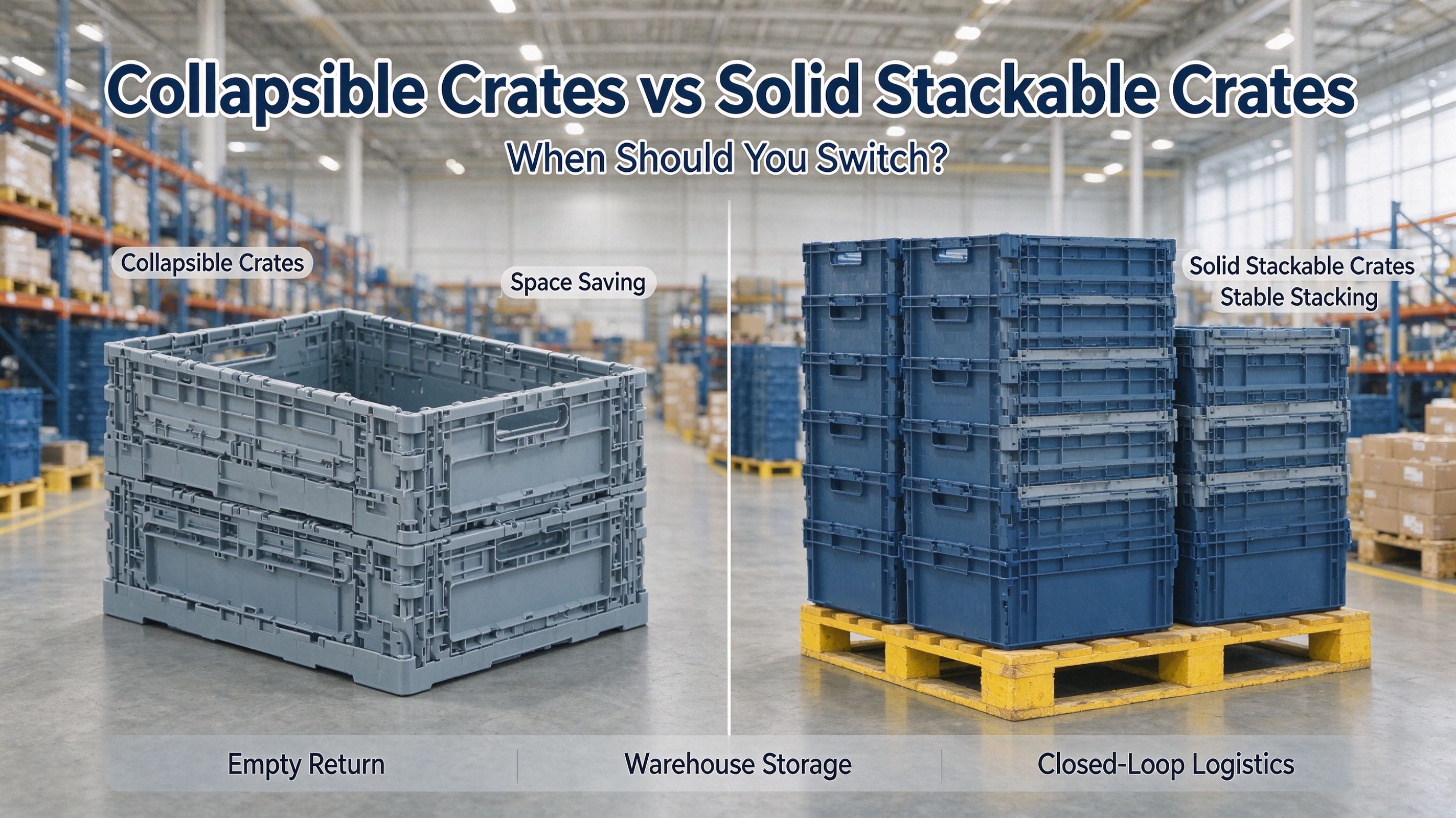
When selecting reusable plastic crate containers for supply chain operations, two mainstream options dominate: collapsible crates and solid stackable crates. Both types are plastic crates built for stacking loaded goods, yet their structural designs fit different logistics workflows. Understanding their strengths and limitations helps you decide whether to stay with your current crate fleet or switch to the alternative.
Solid Stackable Crates
Solid stackable crates are rigid one-piece plastic crates, normally manufactured from thick HDPE or PP. Reinforced walls and interlocking top/base design allow stable vertical stacking for heavy loads. They resist rough forklift handling, cold yard environments and continuous repeated stacking better than collapsible crates.
Key advantages of solid stackable crates
- +Simple structure, no moving hinges or latches, fewer wearable parts
- +Higher impact resistance, suitable for heavy goods and harsh working conditions
- +Reliable performance on automated conveyor systems and long-term static stacking
Limitations
Empty stackable crates retain the same outer dimensions. When empty crates need to be shipped back or stored in bulk, they consume large warehouse space and raise return freight costs.
Best fit for solid stackable crates
Heavy raw material storage, one-way shipment without empty return, outdoor yard handling, frozen warehouse environments and high-impact production lines.
Collapsible Crates
Collapsible crates belong to the plastic crate family with foldable side walls. When assembled and locked, collapsible crates can stack securely just like solid stackable crates. When empty, side panels fold flat, cutting occupied volume by roughly 60–75%. This greatly reduces empty crate storage space and cuts return transport expenses in closed-loop logistics.
Key advantages of collapsible crates
- +Huge space saving for empty storage and return shipments
- +Ideal for seasonal businesses with fluctuating order volume
- +Lower overall logistics cost for closed-loop distribution cycles
Limitations
Hinges and locking latches are wear points that require regular inspection. Collapsible crates are less suitable for ultra-heavy loads and continuous rough impact compared with solid stackable crates.
Best fit for collapsible crates
Closed-loop supply chains with repeated empty returns: fresh produce, seafood, auto parts and retail replenishment; limited warehouse storage; expensive empty container backhaul.
When Should You Switch Between Them?
→ Switch to Collapsible
If empty crate storage and return freight become your major cost, you operate closed-loop delivery, or your warehouse space is limited, collapsible crates will bring obvious space and cost savings.
→ Switch to Solid Stackable
When you handle consistently heavy products, run one-way shipping, operate in rough yard conditions, or need long-duration high stacking without frequent empty returns, solid stackable crates deliver better stability and durability.
Many businesses run mixed fleets: solid stackable crates for heavy inbound inventory and collapsible crates for outbound closed-loop distribution. The right plastic crate choice depends not only on upfront price but your full logistics cycle.
Post time: Nov-27-2026


