

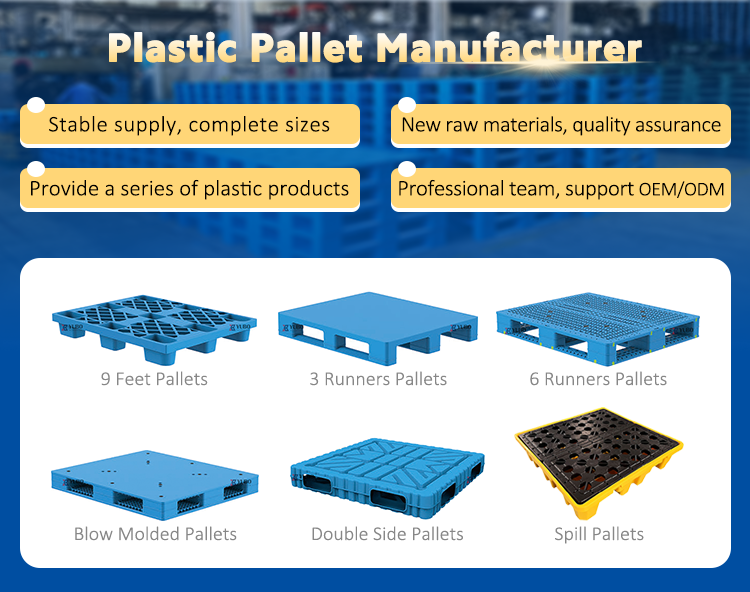
Plastic pallets are indispensable standard logistics packaging supplies, widely adopted across the global supply chain and material handling sectors. Among mainstream pallet sizes, the 1200×800 plastic pallet, also known as the Euro pallet, stands out as one of the most popular and versatile options for European and international logistics operations.
Manufactured from high-density polyethylene (HDPE) or polypropylene (PP) via injection molding, extrusion and other mature forming processes, plastic pallets deliver clear advantages over conventional wooden pallets and steel pallets. They feature lightweight construction, long service life, eco-friendly properties, sanitary surfaces and stable safety performance. Proper use of plastic pallets streamlines warehouse workflows and boosts the overall safety of logistics handling.
Within warehouse operations, plastic pallets support cargo sorting, stacking and bulk storage, enabling fast loading, unloading and transfer with forklifts and pallet jacks. For road and intermodal shipping, these pallets cut product damage rates, lower total logistics costs and accelerate turnaround times. As a foundational unit load solution, plastic pallets remain a core component of modern warehousing and distribution systems.
Key Factors to Consider When Selecting Plastic Pallets
YUBO supplies a full range of plastic pallet models and dimensions. Matching your pallet selection to your cargo type and load requirements is critical for long-term operational reliability. Evaluate the four core criteria below before purchasing plastic pallets:
1. Pallet Size & Dimension
Select pallet specifications based on your cargo dimensions, unit weight and stacking quantity. Oversized or heavy cargo requires larger-format pallets to maintain load stability and prevent shifting during handling. The 1200×800 Euro pallet is a preferred choice for many export and EU-bound shipments.
2. Pallet Load Capacity
Dynamic load, static load and racking load ratings must align with your actual cargo weight. Heavy-duty applications call for high-load plastic pallets to avoid cracking, bending or permanent deformation in transit and rack storage.
3. Plastic Raw Material: HDPE vs PP
HDPE plastic pallets offer superior mechanical strength and outstanding durability, ideal for heavy-load transportation and frequent turnover. PP plastic pallets come with excellent acid, alkali and corrosion resistance, suited for workshops, chemical environments and special working conditions.
4. Surface Style: Solid Deck vs Mesh Deck
Two common surface designs are available. Solid flat deck pallets work well for stable, packaged goods. Mesh deck plastic pallets allow water drainage and air circulation, perfect for wet goods or applications requiring ventilation.
Common Application Scenarios for Plastic Pallets
Thanks to flexible performance, plastic pallets serve diverse industrial and logistics scenarios:
1 Warehousing & Inventory Management
Plastic pallets improve warehouse throughput and storage safety. They simplify cargo sorting, neat stacking and bulk storage, supporting smooth loading, unloading and intra-warehouse movement.
2 Freight & Distribution Logistics
In transportation links, plastic pallets reduce breakage risk and shipping expenses while lifting handling efficiency for LTL, FTL and container shipments.
3 Manufacturing & Production Lines
Production facilities deploy plastic pallets for in-plant material transfer and finished goods staging. They help standardize material flow, raise production efficiency and protect product quality on assembly lines.
Post time: Oct-23-2026


