

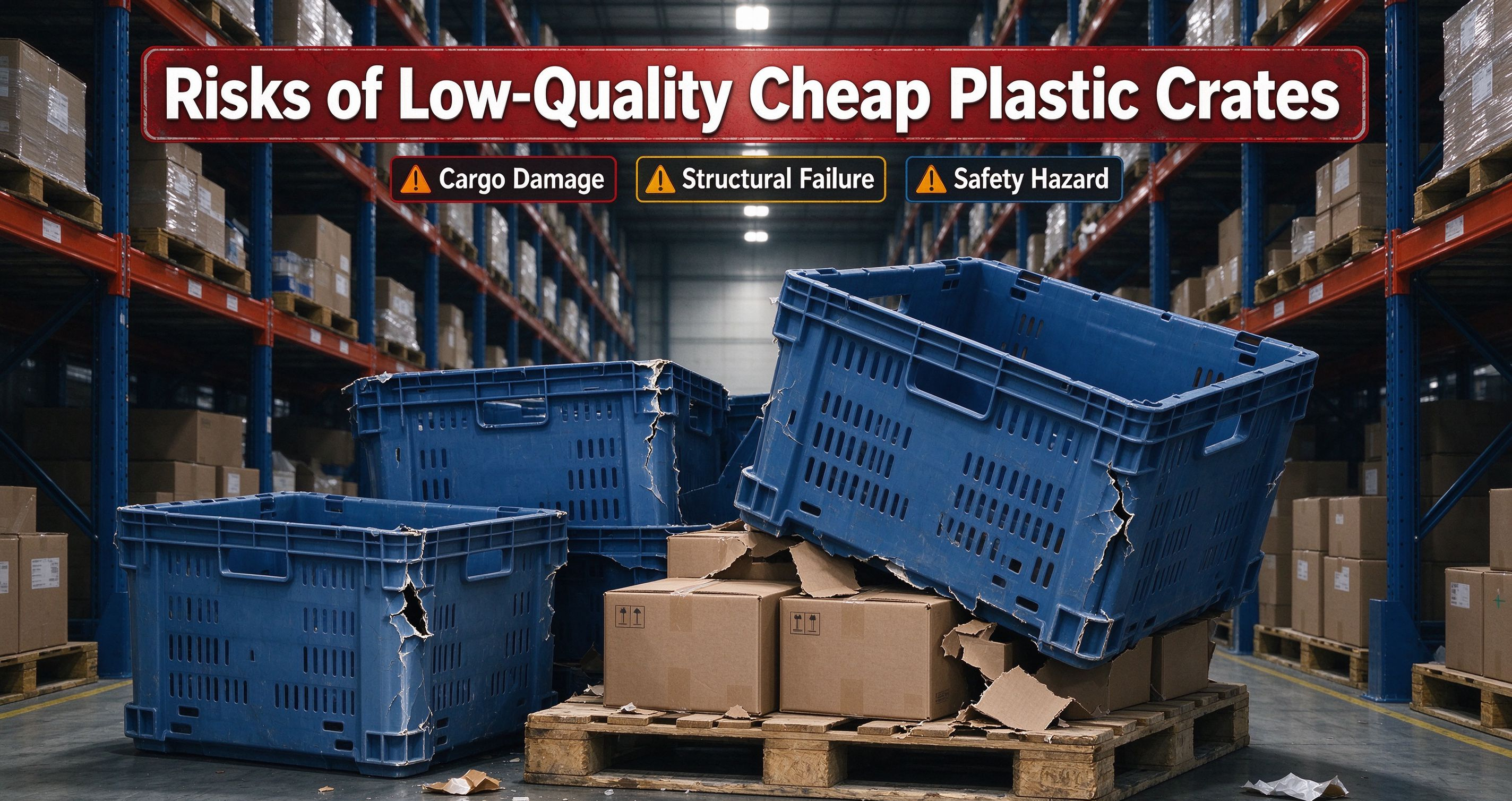
Structural failure and cargo loss
Low-cost plastic crates often use thinner walls, weaker corners and mixed recycled materials. Some budget models under $4 per unit may experience a 15–25% failure rate within the first year. Common issues include corner cracks, slat breakage, base damage and stack collapse. These failures can damage goods, delay operations and create safety hazards in warehouses.
Brittle failure in cold conditions
In cold storage or cold chain environments, low-quality recycled plastic can become more brittle. That increases the risk of sudden fracture during loading, stacking or transport. High-quality HDPE or PP plastic crates are usually designed for better impact resistance across temperature ranges.
Food contact and contamination risks
Cheap plastic crates made from mixed post-consumer regrind may contain unknown impurities. If they are not food-grade, they can contaminate fresh produce, meat or food ingredients. Such crates may fail EU REACH, FDA or other food-contact requirements, leading to shipment detention or product recalls.
Overstated load ratings
Some low-quality plastic crates are sold with load claims that have not been independently tested. If a warehouse relies on printed ratings that are inaccurate, stack collapse can occur. Reputable suppliers usually provide test reports for static load, dynamic stacking and impact resistance.
Higher total cost
A cheap plastic crate may seem cheaper at first, but frequent replacement increases total cost. In one logistics case study, low-cost crates showed a 24% failure rate within six months, erasing much of the initial savings through replacement, damaged inventory and emergency handling.
How to reduce risk
Before ordering bulk plastic crates, verify the material specification, wall thickness, corner reinforcement, stacking structure and test documentation. For food applications, confirm food-contact compliance and resin traceability.
Post time: Nov-06-2026


