

When selecting reusable plastic crates for agriculture, food processing and distribution warehouses, buyers often face a key decision: stackable plastic crates or nestable plastic crates. The space-saving performance differs greatly between these two plastic crate types, depending on whether the crates are loaded with goods or empty for storage and return transport.
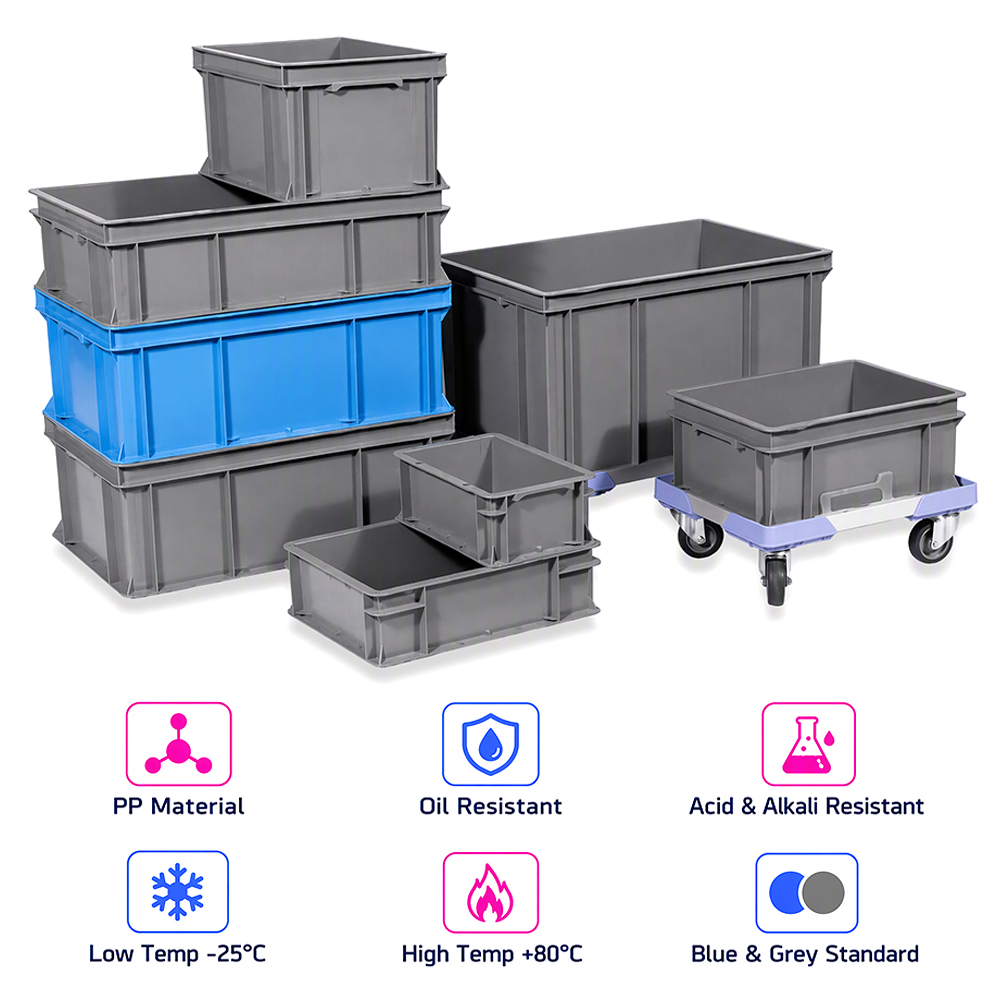
Reinforced top and bottom interlocking design. Full loaded plastic crates stack securely vertically. They cannot fit inside each other when empty.
Rotate the crate 180°, empty crates slide inside one another. When loaded, they can also stack safely like standard stackable plastic crates.
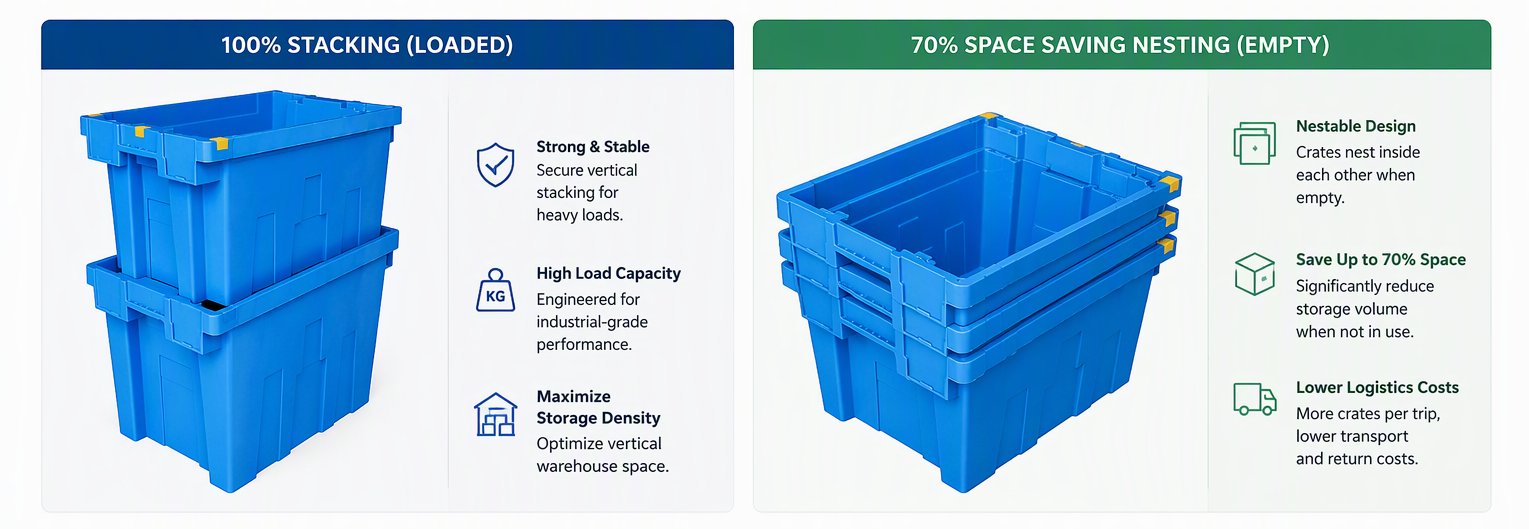
The biggest gap appears during empty crate storage and reverse logistics return trips, which accounts for most wasted warehouse cubic space in closed-loop crate fleets. Using a common 600×400×320mm plastic crate as reference:
Industry market data confirms nestable plastic crates reduce empty return transport volume by 35–45%, cutting reverse logistics freight cost significantly. For operations with frequent crate return cycles, nestable plastic crates deliver much better empty-space savings.
But for loaded inventory storage inside your warehouse, stackable plastic crates have advantages. Reinforced interlocking structure supports stable stacking height up to 1.8m, without deformation. Stackable plastic crates are widely used in cold storage and high rack warehouses, where heavy loaded produce needs stable vertical stacking.
- ✔ Closed-loop supply chain with large volumes of empty plastic crates returned to your warehouse
- ✔ Limited warehouse floor space for empty crate storage
- ✔ Long-distance reverse transport for reusable plastic crate fleets
- ✔ Farms, fruit packing plants with frequent crate rotation
- ✔ High rack warehouse, heavy load storage and cold chain distribution
- ✔ Minimal empty crate return volume; crates stay in one facility most of the time
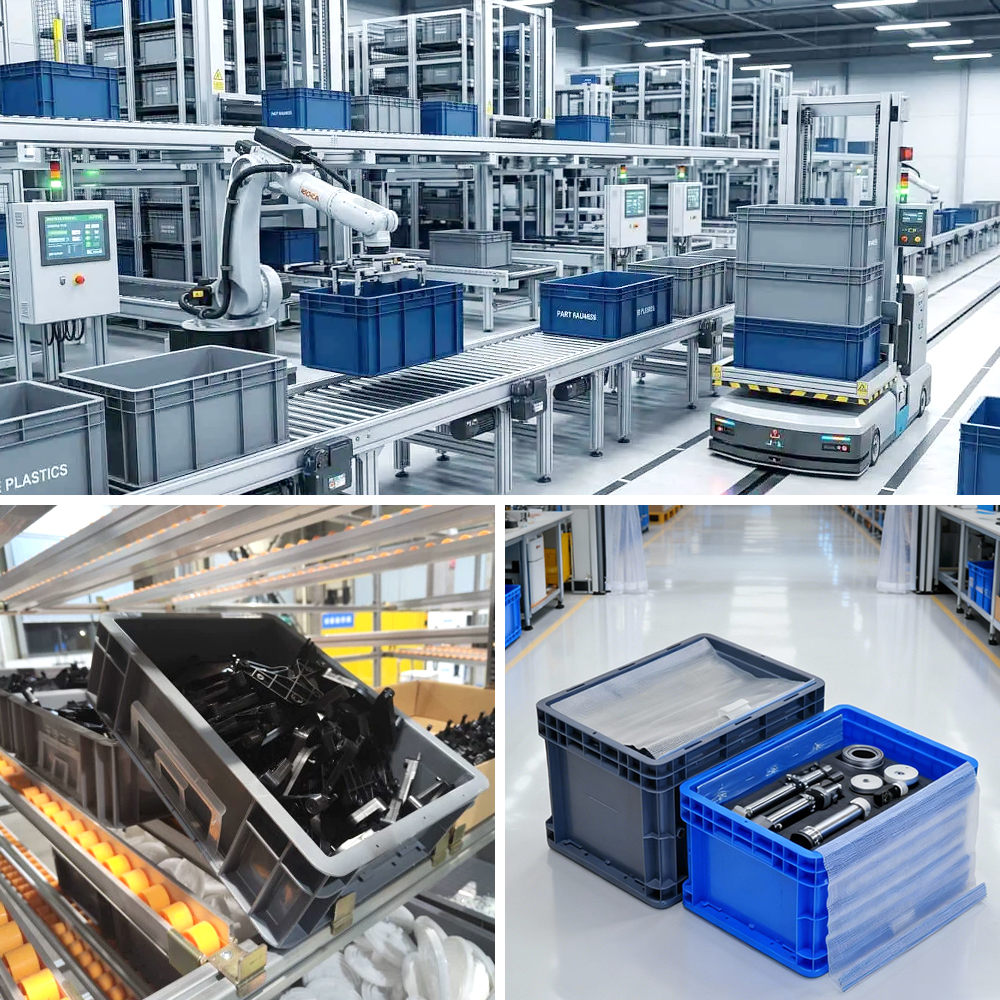
- ✔ Automated conveyor systems requiring rigid, fixed interlocking plastic crate structure
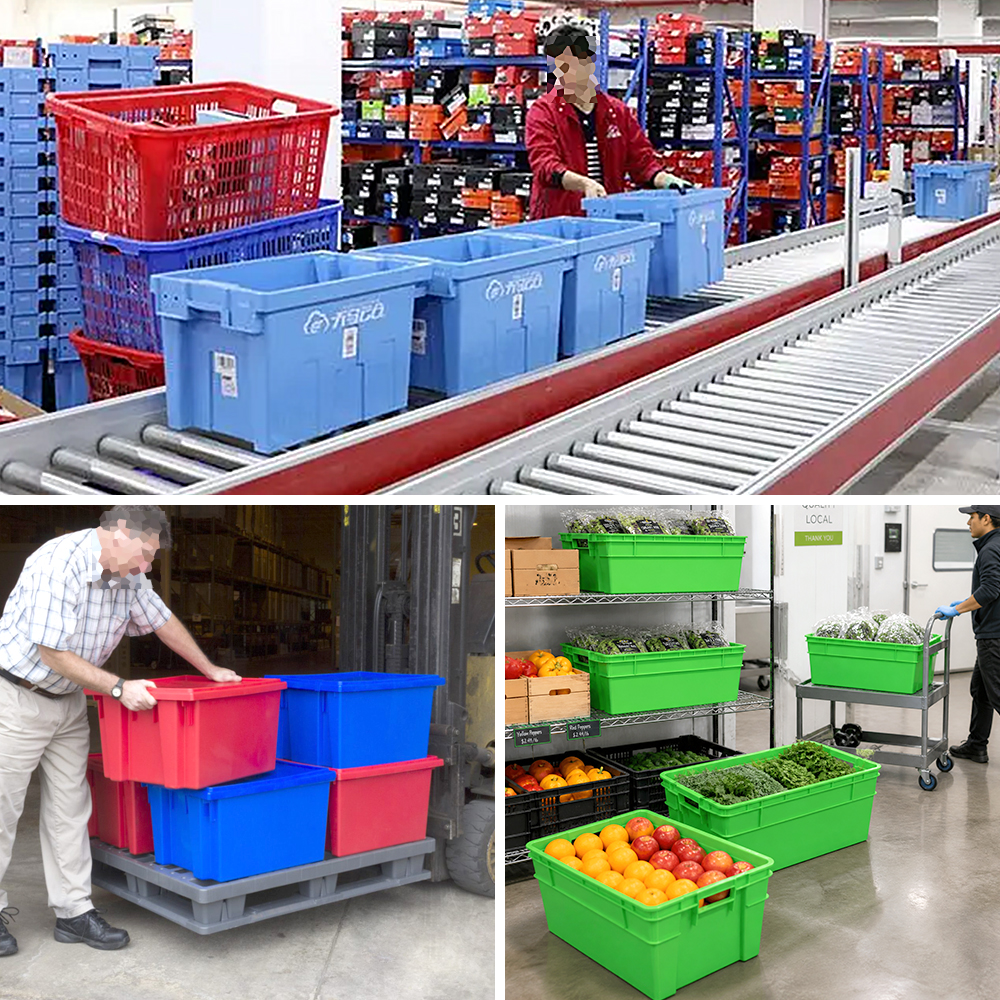
Many buyers select hybrid stack-nest plastic crates. They stack securely when loaded, and nest for compact storage once empty. This plastic crate model balances both warehouse storage needs, ideal for medium-sized distribution centers and supermarket supply chains.
- Load bearing: dedicated stackable plastic crates usually have higher dynamic stacking load capacity
- Cleaning: wall design on both types allows washing and sanitising for food-grade applications
- Unit cost: nestable plastic crates usually carry slightly higher per-unit cost, but ROI comes from reduced empty storage and freight over multiple reuse cycles
Nestable plastic crates win for empty crate warehouse storage and reverse logistics space saving. Stackable plastic crates are better for maximising vertical rack space for loaded goods and heavy-duty high stacking. Your warehouse workflow, crate turnover rate and reverse logistics plan determine which plastic crate delivers the best overall value.
Reach out to our team to get custom dimension and load recommendations for your plastic crate bulk order.
Post time: Oct-30-2026


