

In the competitive world of seafood logistics, maintaining product integrity from catch to consumer is paramount. The demand for durable, hygienic, and efficient packaging solutions has never been higher. Enter stack and nest containers—specifically engineered plastic crates designed to withstand the harsh marine environment. These innovative containers offer superior moisture and salt resistance, ensuring that seafood remains fresh, safe, and visually appealing throughout the supply chain.
Why Plastic Crates Are Revolutionizing Seafood Logistics
Traditional wooden or metal containers often fall short in terms of hygiene and durability when exposed to salty air and constant moisture. Plastic crates, on the other hand, provide a non-porous surface that prevents bacterial growth and makes cleaning effortless. This is crucial for meeting stringent food safety standards such as HACCP and FDA regulations. Moreover, the stack and nest design maximizes space efficiency during transportation and storage, reducing costs and carbon footprint.
Moisture Resistance: Protecting Against Spoilage
Seafood is highly susceptible to spoilage due to its high water content and sensitivity to environmental conditions. Stack and nest containers made from high-density polyethylene (HDPE) or polypropylene (PP) offer excellent moisture resistance. These materials do not absorb water, preventing the growth of mold and mildew. This feature is particularly important in humid climates or during long-haul shipments where condensation can be a significant issue. By keeping the interior dry, these containers help extend the shelf life of seafood products, reducing waste and increasing profitability for businesses.
Salt Resistance: Combating Corrosion and Degradation
The marine environment is notoriously corrosive due to the presence of salt. Traditional materials like wood can warp and rot, while metals can rust and degrade over time. Plastic crates, however, are inherently resistant to salt corrosion. This ensures that the containers maintain their structural integrity and appearance even after repeated exposure to salty conditions. For seafood processors and distributors operating near coastal areas or on fishing vessels, this durability translates into longer container lifespans and lower replacement costs.
Enhancing Supply Chain Efficiency with Stack & Nest Design
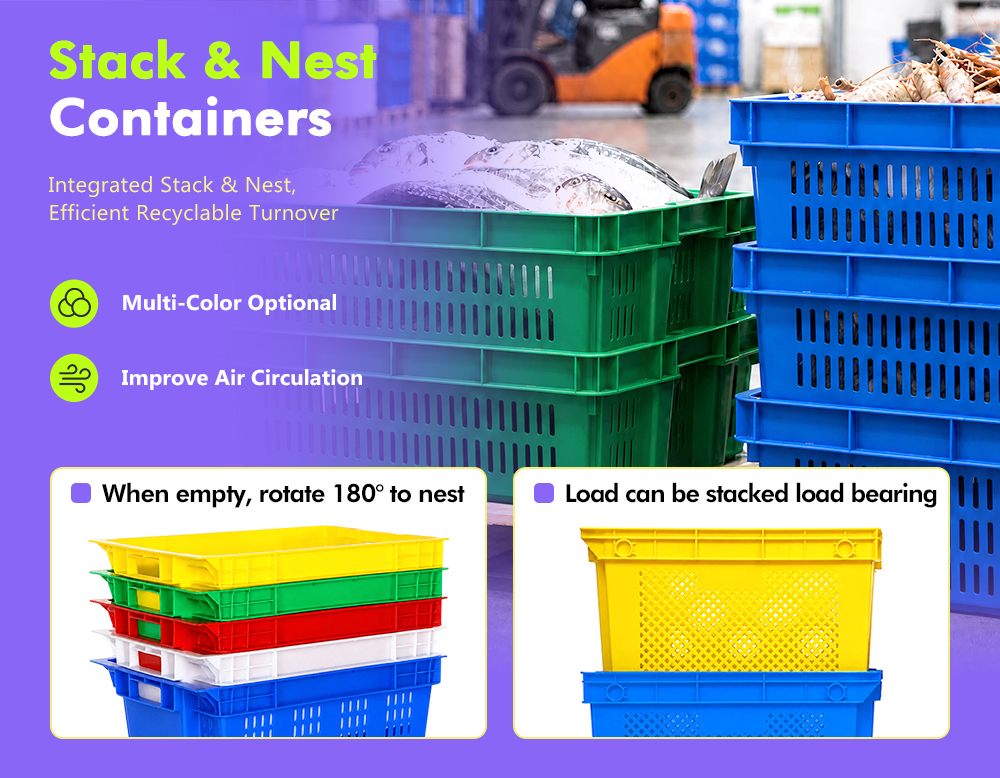
The stack and nest functionality of these plastic crates offers dual benefits. When filled, they can be securely stacked to maximize vertical space in trucks, refrigerated containers, and warehouses. When empty, they nest together to minimize storage volume, freeing up valuable space. This design not only optimizes logistics but also reduces handling times and labor costs. Additionally, the ergonomic features of modern plastic crates, such as integrated handles and smooth edges, improve worker safety and ease of use.
Meeting Consumer Expectations for Freshness and Sustainability
Today’s consumers are increasingly conscious about the freshness and sustainability of their seafood purchases. Transparent or semi-transparent plastic crates allow for easy visual inspection of the product without compromising protection. Furthermore, many manufacturers are now producing eco-friendly plastic crates using recycled materials, aligning with global sustainability goals. This combination of functionality, hygiene, and environmental responsibility makes stack and nest plastic crates an ideal choice for the modern seafood industry.
As the seafood industry continues to evolve, the need for reliable and efficient packaging solutions becomes more critical. Stack and nest containers with superior moisture and salt resistance represent a significant advancement in this field. By choosing high-quality plastic crates, businesses can enhance product quality, reduce operational costs, and meet the growing demands of health-conscious consumers. Embracing these innovative packaging solutions is not just a logistical upgrade—it’s a strategic move towards greater sustainability and competitiveness in the global seafood market.
Post time: Nov-13-2026


