

For farmers, packhouses and fresh produce distributors, plastic harvest crates are the core reusable packaging for fruits, vegetables and leafy greens. Many buyers focus only on crate weight, load capacity and stackability, yet ventilation slot design directly determines produce shelf life and reduces your supply chain loss.
Harvested fruits and vegetables continue respiration after picking. They release field heat, moisture and ethylene gas inside the plastic crate. Without proper airflow, trapped heat speeds up ripening; condensed moisture creates mold and bacterial rot; accumulated ethylene accelerates spoilage of the whole batch of produce in the plastic slatted crate.
How Ventilation Slots Work in Plastic Crates
Good slatted plastic harvest crates adopt engineered open area ratios. Standard agricultural plastic crates feature 25–40% wall open area, while high-airflow versions for leafy greens can exceed 50%. Slots are arranged on both side walls and crate bases, to build continuous 360-degree airflow when plastic crates are stacked on pallets.
This design delivers 3 core benefits:
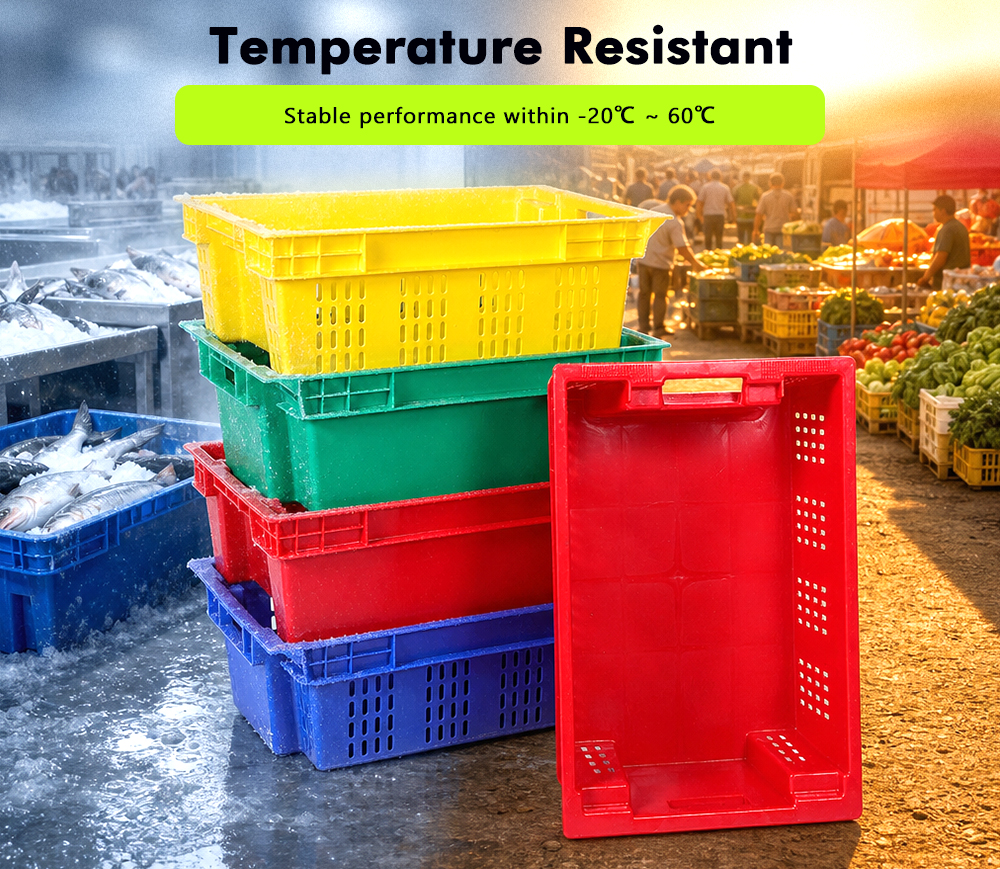
Not all ventilation slots deliver equal performance. Poorly designed plastic crates with misaligned slots create airflow dead zones after stacking. Even with many holes, inner produce cannot receive cold air, leading to inconsistent temperatures inside each plastic slatted crate.
Crop-specific Ventilation Reference
- ✔ Leafy greens & berries: ≥25% open area, full side + base slots for high respiration crops
- ✔ Citrus: 10–15% open area, balance airflow and stacking strength
- ✔ Root vegetables: 8–10% controlled ventilation, avoid dehydration while preventing condensation
What to Check When Sourcing Ventilated Plastic Crates
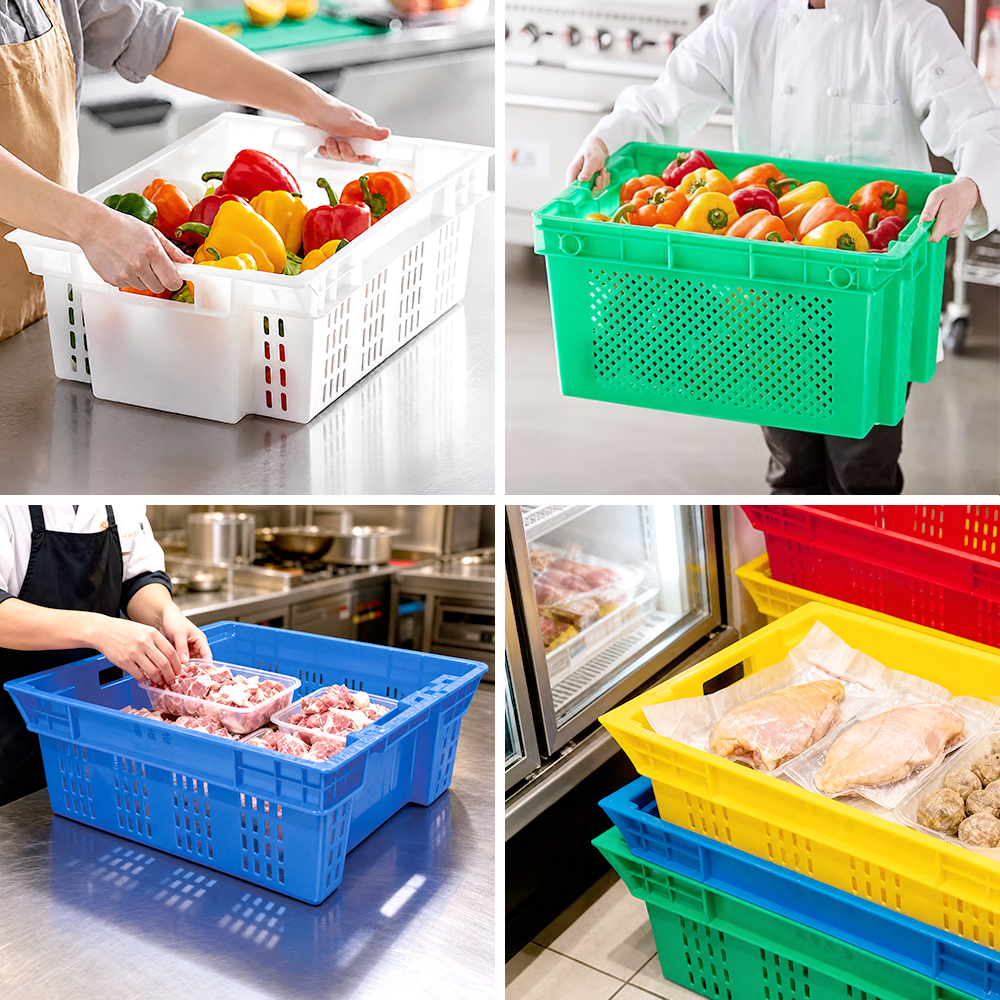
Ventilation slots are not optional cosmetic features for plastic harvest crates. They are a functional engineering element protecting your produce value. Selecting the right ventilated plastic slatted crate reduces waste, stabilises cold chain performance and improves ROI on reusable packaging.
Post time: Oct-30-2026


