

In the fast-paced world of modern logistics and warehousing, plastic turnover boxes (also known as logistics transfer containers) have become indispensable tools for efficient goods handling, storage, and transportation. Their versatility, durability, and cost-effectiveness make them a top choice for businesses across industries—from automotive manufacturing to e-commerce fulfillment. To help businesses make informed decisions when selecting the right plastic turnover box, we’ve compiled a detailed classification guide covering shapes, lids, materials, performance, and the widely used EU series standard.
1
Classification by Shape: Tailored to Different Logistics Needs
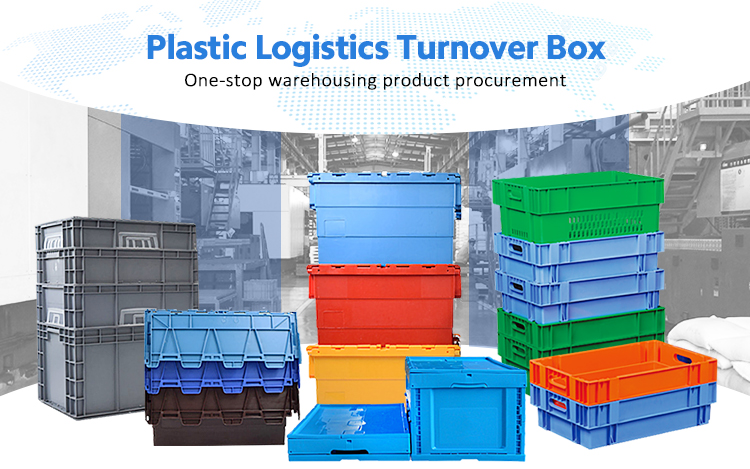
The shape of a plastic turnover box directly impacts its stackability, storage efficiency, and suitability for specific scenarios. Here are the four main types categorized by shape:
1.1 Standard Turnover Boxes
As the most common stackable logistics turnover boxes, standard models are designed for maximum convenience in stacking. Whether equipped with a matching lid or not, they allow flexible stacking of two or more boxes without any hindrance. Their simple and practical design makes them ideal for general-purpose use in warehouses, factories, and distribution centers, supporting seamless turnover of a wide range of goods.
1.2 Slant-Insert Turnover Boxes
This type of logistics box can be paired with concave outward-turned lids, which are essential for stacking. A key advantage of slant-insert turnover boxes is their ability to reduce storage volume when empty, significantly cutting back on return logistics costs during transportation. It’s important to note that stacking two or more slant-insert boxes requires the use of matching lids—without them, stable stacking cannot be achieved.
1.3 Staggered Turnover Boxes
Combining the strengths of standard and slant-insert turnover boxes, staggered models offer the best of both worlds. They not only enable flexible stacking of multiple boxes but also allow nested stacking of empty boxes without the need for any auxiliary accessories. This dual functionality effectively reduces empty box storage space and lowers round-trip logistics costs, making them a cost-efficient choice for businesses with frequent empty box returns.
1.4 Foldable Turnover Boxes
Unlike one-piece molding boxes, foldable turnover boxes are assembled from multiple parts. When empty, they can be folded flat, saving up to 70% of storage space compared to their fully assembled state. This design is particularly beneficial for businesses with limited warehouse space or those that need to transport large quantities of empty boxes, as it optimizes storage and transportation efficiency.
2
Types of Lids for Plastic Turnover Boxes
To meet diverse usage needs, plastic turnover boxes are available with two main types of lids: flip lids and flat lids. Flip lids are designed for easy opening and closing, ideal for scenarios where goods need to be accessed frequently. Flat lids, on the other hand, provide a smooth, even surface that enhances stacking stability and protects the contents from dust, moisture, and damage during transportation. Both lid types can be customized to fit different box sizes and usage scenarios.
3
Materials: High-Impact and Durable Options
High-quality materials are the foundation of a durable plastic turnover box. Most models are injection-molded using two main materials known for their high impact strength: High-Density Polyethylene (HDPE) and Polypropylene (PP).
HDPE
Excellent toughness, resistance to low temperatures (down to -40°C), and tolerance to chemicals such as oil, acid, and alkali. Ideal for harsh logistics environments and cold-chain applications.
PP (Polypropylene)
Superior rigidity and heat resistance (up to 120°C), suitable for scenarios requiring high-temperature disinfection, such as food processing facilities. Environmentally friendly, reusable, and recyclable.
4
Classification by Performance: Antistatic vs. Non-Antistatic
Based on performance, plastic turnover boxes are divided into antistatic and non-antistatic models, each tailored to specific industry needs:
Antistatic Logistics Boxes
Modified with antistatic masterbatches or carbon fiber, these boxes can quickly dissipate static electricity, preventing electrostatic accumulation that could damage sensitive electronic components. Widely used in the electronics, semiconductor, and precision manufacturing industries.
Non-Antistatic Logistics Boxes
Standard models without antistatic modification, suitable for transporting and storing non-static-sensitive goods such as hardware, clothing, food, and general industrial parts. Reliable durability and cost-effectiveness for everyday logistics needs.
5
EU Series Standard Stackable Logistics Turnover Boxes: A Global Benchmark
The EU series standard stackable logistics turnover box is a European standard container used globally by Toyota Motor Corporation and many other leading enterprises. Renowned for its rational design, premium quality, and versatile performance, the EU series stands out in modern logistics operations.
Key Features of the EU Series
- Convenient turnover, neat stacking, and easy management
- Excellent resistance to oil, acid, and alkali
- Wide temperature range adaptability: -25°C to 60°C
- Suitable for closed-loop distribution systems including transportation, warehousing, circulation, and manufacturing
- Over 30 specifications available, compatible with standard forklift plastic pallets, logistics containers, and workstation equipment
- Supports mechanized handling, modern logistics generalization, and supply chain integration
As an essential tool for achieving mechanized handling, modern logistics generalization, and integration, the EU series helps businesses improve operational efficiency, reduce costs, and enhance supply chain competitiveness.
Choosing the right plastic turnover box depends on your specific logistics needs—from shape and material to performance and industry standards. By understanding these classifications, businesses can optimize their storage and transportation processes, boost efficiency, and achieve long-term cost savings in their supply chain operations.
Post time: Apr-10-2026


