

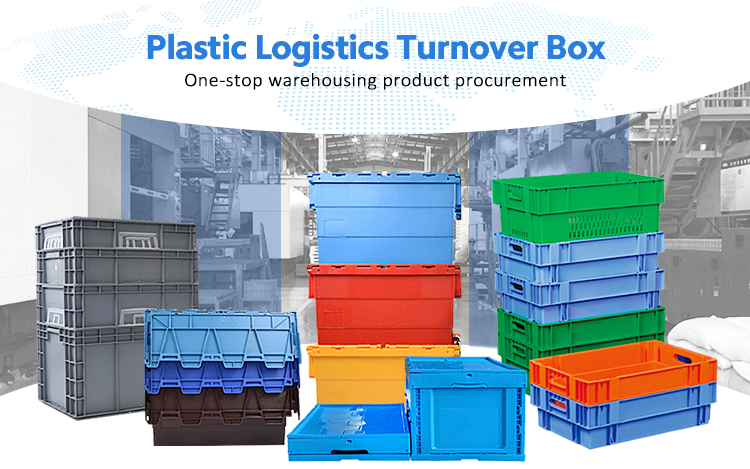
Aplastic turnover crate is one of the most practical and reusable logistics containers for modern factory production, warehouse storage, and cargo distribution. Compared with disposable cartons and wooden boxes, a high-quality plastic turnover crate features drop resistance, high toughness, lightweight structure, and long service life. Standard operating methods are essential to avoid crate deformation, cargo damage, and unnecessary logistics costs. This guide introduces the correct usage, cargo placement rules, pallet matching and stacking standards for a plastic turnover crate.
1. Standard Handling to Prevent Structural Damage
All plastic turnover crate products require gentle handling during daily loading, unloading and transportation. Violent dropping, high-altitude throwing, and uneven landing impact will cause irreversible damage, including bottom cracking, edge breakage and box body deformation. Whether empty or fully loaded, a plastic turnover crate should never be dropped from height. Standard handling effectively maintains the structural stability of the crate and supports long-term repeated use.
2. Scientific Cargo Placement Rules
Follow the industry-standard load specification: the single cargo weight of one plastic turnover crate shall not exceed 25KG, which fits safe manual handling standards. In addition, do not overfill the crate. Reserve at least 20mm gap at the top (excluding upper joint areas) to prevent direct extrusion, friction and contamination of goods, ensuring product cleanliness and integrity during storage and transit.
3.Pallet Matching & Safe Stacking Standards
For multi-layer stacking operations, strictly abide by the load-bearing limit of the plastic turnover crate. Do not pursue excessive stacking height, as overloading will crush the bottom crates and cause safety hazards. For mechanical transportation and cross-regional logistics, neatly stack the plastic turnover crate on standard pallets and reinforce with professional binding and wrapping. This improves overall stability and meets standardized warehousing, handling and transportation requirements.
Standardized use is the foundation of efficient logistics with a plastic turnover crate. Gentle handling, uniform cargo placement, reasonable load control and standard pallet stacking can effectively reduce crate damage and cargo loss. Proper operation greatly improves the utilization rate of each plastic turnover crate and optimizes the overall efficiency of enterprise supply chain management.
Post time: Sep-04-2026


